

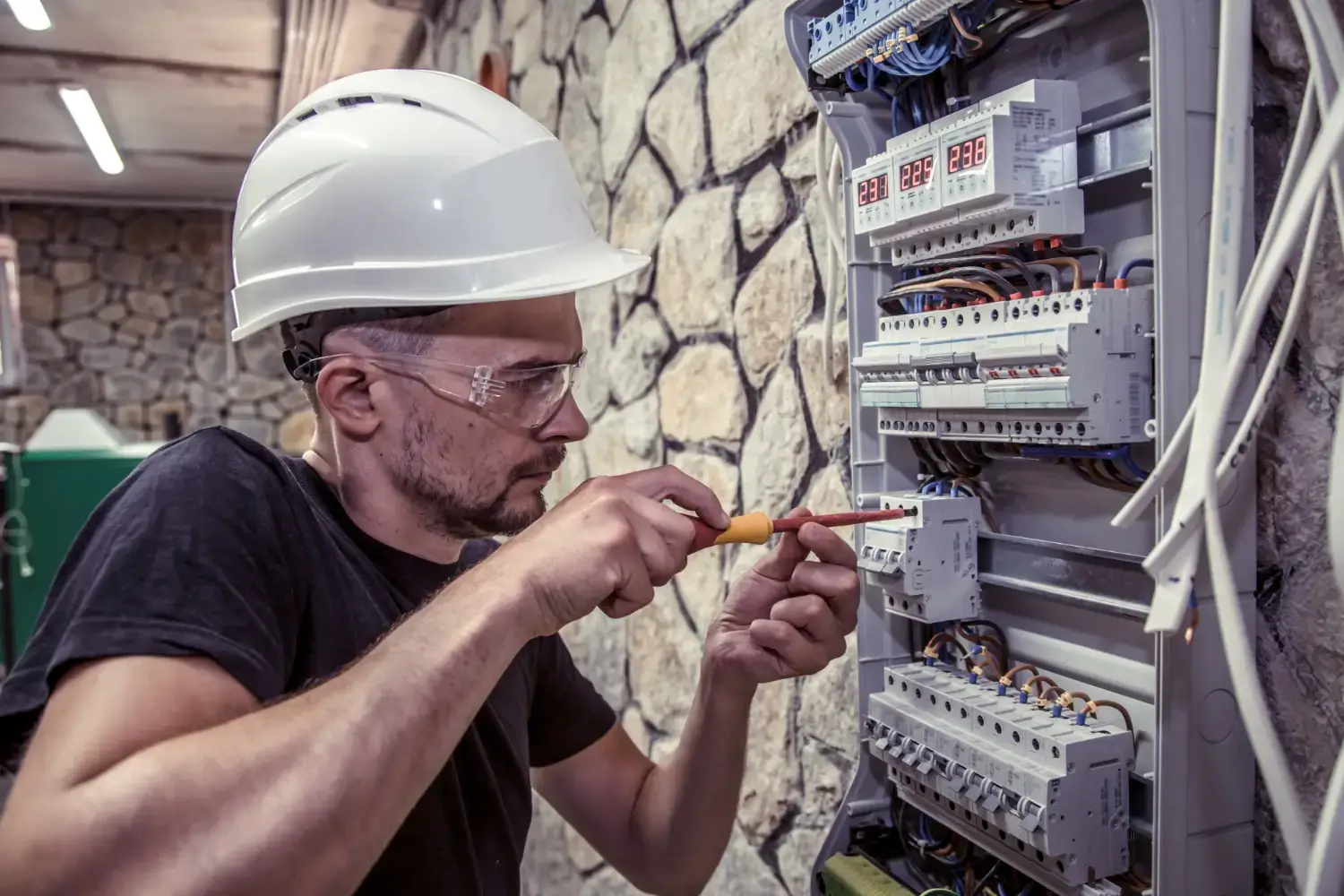
Circuit breakers are an important part of a property's electrical safety system. They help interrupt electrical flow when certain faults occur, reducing the risk of damage to wiring and connected equipment. However, repeated tripping, burning smells or unusual sounds around a distribution board should never be ignored.
Understanding the common signs of a faulty circuit breaker can help homeowners and businesses recognise when professional electrical inspection may be necessary. In Singapore, electrical issues in HDB flats, condominiums, landed homes and commercial premises should be assessed by an appropriately qualified professional.
A circuit breaker is a protective device that automatically interrupts electrical current when it detects conditions such as an overload or short circuit. Depending on the installation, other protective devices may also help protect against earth leakage and electric shock.
Circuit breakers are commonly housed in a distribution board, also known as a DB box. If a breaker trips, it may be responding correctly to an electrical fault rather than being faulty itself.
One of the most noticeable warning signs is a breaker that trips repeatedly. This can happen when too many appliances are operating on the same circuit, an appliance is faulty, wiring is damaged or another electrical problem is present.
Do not repeatedly reset a breaker without identifying the cause. If it continues to trip, arrange a professional inspection.
A burning or melting-plastic smell near a distribution board may indicate overheating, a loose connection or damaged electrical components. This should be treated as a serious warning sign.
Do not open the DB box or touch the breaker. Move away from the affected area and seek urgent professional assistance. If you see smoke or fire, evacuate and contact emergency services.
Electrical equipment can generate some heat during operation, but unusual overheating may indicate an overloaded circuit, a poor connection or a damaged component.
Do not touch or attempt to inspect a suspected overheating breaker. Have it assessed by a qualified professional.
Unusual buzzing, crackling or popping sounds from a distribution board can indicate a problem with an electrical connection or component. Do not assume the sound is harmless, especially if it occurs alongside heat, a burning smell or repeated tripping.
Arrange an inspection and avoid opening the board yourself.
Discolouration, melted plastic, scorch marks or visible damage around a breaker or distribution board may indicate overheating or electrical arcing.
Keep away from damaged equipment and seek professional assistance. Do not attempt to replace the breaker yourself.
If a breaker immediately trips again after being reset, there may be an ongoing fault in the circuit, connected equipment or wiring. A damaged breaker is also possible, but the cause cannot be determined from this symptom alone.
A professional can investigate the circuit and identify the appropriate corrective action.
If power repeatedly goes off in a particular room or affects specific lights, sockets or appliances, the problem may involve a circuit breaker, wiring, an electrical connection or connected equipment.
Recording which areas lose power and when the issue occurs can help an electrician understand the symptoms. Do not remove electrical covers or handle exposed wiring while investigating.
A circuit breaker may trip for several reasons. Common possibilities include:
The correct solution depends on the cause. Replacing a breaker without investigating the underlying fault may not resolve the problem.
If you notice smoke, fire, sparks or a strong burning smell, do not attempt to reset the breaker or investigate the DB box. Move to a safe location and contact emergency services if there is an immediate danger. Electrical repairs should be carried out by an appropriately qualified professional.
A circuit breaker may need replacement if inspection and testing show that it is damaged, worn out or no longer operating correctly. However, repeated tripping does not automatically mean the breaker itself is defective.
Before replacing a component, the electrician should investigate possible overloads, wiring faults, connected appliances and other causes. The correct replacement must also be suitable for the electrical installation.
Learn more about DB box and circuit breaker installation and replacement services in Singapore.
Yes. A damaged breaker or an unresolved electrical fault can contribute to overheating, equipment damage, electric shock or fire risks. A breaker that trips repeatedly may be providing an important warning that something in the circuit needs attention.
Never bypass a circuit breaker, install an unsuitable replacement or keep resetting it to restore power without understanding the cause.
Warning signs include repeated tripping, unusual heat, burning smells, buzzing or crackling sounds, visible damage and a breaker that will not remain on. These symptoms can also indicate other electrical faults, so professional testing is needed to identify the cause.
The appliance may be faulty, the circuit may be overloaded or another electrical problem may be present. Stop using the affected appliance if you suspect a fault and arrange an appropriate inspection.
No. Repeatedly resetting a breaker without identifying the cause can leave a potentially dangerous fault unresolved. If it trips again, seek professional assistance.
Working inside a distribution board can expose you to dangerous electrical voltages. Do not attempt DIY breaker replacement. Use an appropriately qualified professional who can assess the fault and carry out the work safely.
Smoke, fire, sparks, a strong burning smell or signs of severe overheating should be treated as urgent hazards. Keep away from the equipment, move to safety and contact emergency services when necessary.
A circuit breaker that trips repeatedly, becomes unusually hot, makes abnormal sounds or shows signs of damage should be checked. These symptoms may point to a defective breaker or another problem with the electrical circuit.
For properties in Singapore, professional assessment can help identify the cause and determine whether repair, replacement or further electrical work is required. Explore the AVV Electrical website to learn more about electrical services and troubleshooting.
Categories: Electrical Safety, Electrical Troubleshooting, Electrical Services
Tags: faulty circuit breaker Singapore, circuit breaker keeps tripping, DB box Singapore, circuit breaker replacement, electrical safety Singapore, electrical troubleshooting

We are a reputable electrical services company based in Singapore, specializing in providing reliable and efficient emergency electrician services. Our team of certified electricians has years of experience in handling all types of electrical emergencies, ensuring that our clients receive prompt and effective solutions to their problems.
2026 AVV Electricals, All Rights Reserved.
We are a reputable electrical services company based in Singapore, specializing in providing reliable and efficient emergency electrician services. Our team of certified electricians has years of experience in handling all types of electrical emergencies, ensuring that our clients receive prompt and effective solutions to their problems.
Our Services

Singapore’s trusted EMA-licensed electrician — serving HDB, condo, landed & commercial properties 24/7.