

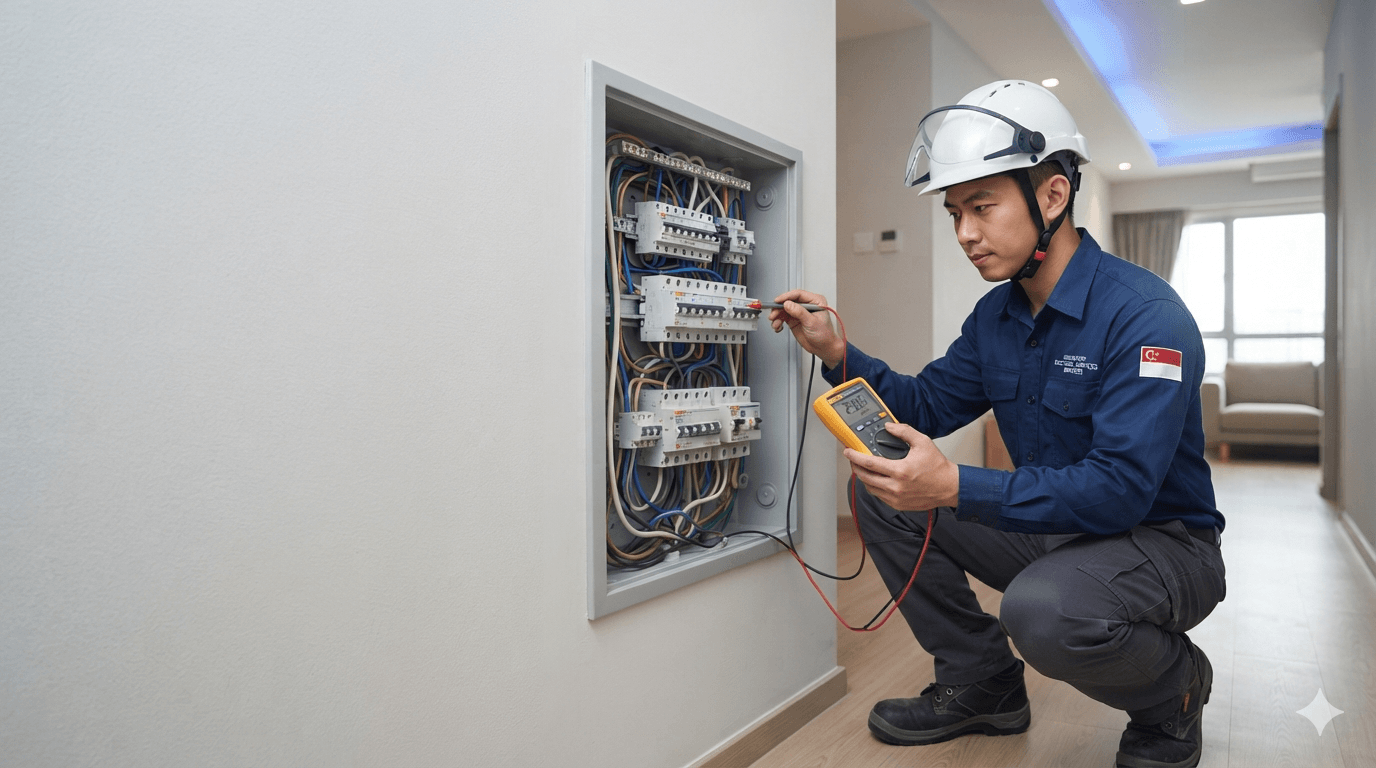
Most electrical problems start small. A slightly warm socket, a breaker that trips once a month, a light that flickers when the aircon starts. Because the system keeps working, these signs are easy to ignore, until they are not.
An electrical safety inspection in Singapore is how you find these hidden issues early. This guide explains what an inspection involves, which warning signs matter and how to decide when it is time to call a licensed electrician.
An electrical safety inspection is a systematic check of your electrical installation by a qualified professional. The goal is to assess whether wiring, protective devices and fittings are in safe working condition and to identify anything that is worn, damaged, overloaded or unsafe.
It is different from a repair call. With a repair, you already know something is broken. With an inspection, you are checking the whole system to catch problems before they cause one.
While the exact scope depends on the property, a thorough inspection typically looks at the following.
The DB box controls and protects every circuit in your home. An electrician checks its overall condition, the state of the circuit breakers (MCBs), whether circuits are properly labelled and whether there are signs of heat damage or loose connections. If it is outdated or overloaded, a DB box upgrade may be recommended.
The RCCB is a key safety device designed to cut power quickly if electrical leakage is detected. A proper inspection includes checking that it operates as it should, because a device that fails to trip offers no protection when you need it.
Electricians inspect accessible wiring and connections for damage, wear, loose terminations and signs of overheating. Older homes may have wiring that was never designed for today's appliance loads. In some cases, partial or full rewiring is the right long-term fix.
Power points and switches take daily wear. Cracked faceplates, discolouration, looseness or a warm feel are all signs of a problem. These are inspected and, where needed, repaired or replaced. See our switch and power point repair service.
Water heaters and air-conditioners draw significant current. The inspection checks that the circuits and protection serving them are in good condition. Learn more about water heater and aircon wiring.
Lighting circuits, fittings and ceiling fan connections are checked for faults, loose wiring and signs of wear.
An electrician will also note signs of overloading, such as heavily used multi-plugs or extension cords powering high-wattage appliances, and advise on safer arrangements.
Book an inspection, or call an electrician sooner, if you notice any of these:
If you notice sparks, burning smells or repeated trips, switch off the affected circuit where it is safe to do so and contact a licensed electrician right away.
There is no single schedule that fits every property, but these are sensible moments to schedule one:
For commercial and industrial premises, some installations may be subject to statutory inspection requirements under Singapore regulations, so check with EMA or a licensed professional about what applies to yours.
In Singapore, electrical installation work is regulated, and inspections and repairs should be handled by appropriately licensed professionals. Using an EMA-licensed electrician means the person assessing your system is qualified to do so, and any follow-up work is carried out to the right standard. You can read more about what EMA licensing means when choosing a contractor.
A good electrician will:
If something needs urgent attention, such as a failing breaker or damaged wiring, it should be addressed promptly rather than postponed.
How long does an electrical safety inspection take?
It depends on the property size and number of circuits. A smaller flat is generally quicker than a large landed home or commercial space.
Will the inspection cut my power?
Some checks may require briefly switching off circuits. A professional electrician will explain this beforehand and plan around your needs.
Is an inspection the same as a repair?
No. An inspection assesses the condition of your installation. Repairs are carried out separately and only after you approve a quotation.
Do I need an inspection if nothing seems wrong?
Not every fault is visible. An inspection is a good idea for older properties, after moving in, and before renovation, even when everything seems to be working.
If you want clear answers about the condition of your wiring, DB box and protective devices, AVV Electrical can help. Our EMA-licensed team serves HDB flats, condos, landed homes and commercial properties across Singapore.
👉 Learn more about our electrical safety inspection service in Singapore, or call +65 8161 4519 for a quotation. For urgent faults, our 24-hour emergency electrician is available any time.
We are a reputable electrical services company based in Singapore, specializing in providing reliable and efficient emergency electrician services. Our team of certified electricians has years of experience in handling all types of electrical emergencies, ensuring that our clients receive prompt and effective solutions to their problems.
2026 AVV Electricals, All Rights Reserved.
We are a reputable electrical services company based in Singapore, specializing in providing reliable and efficient emergency electrician services. Our team of certified electricians has years of experience in handling all types of electrical emergencies, ensuring that our clients receive prompt and effective solutions to their problems.
Our Services

Singapore’s trusted EMA-licensed electrician — serving HDB, condo, landed & commercial properties 24/7.