

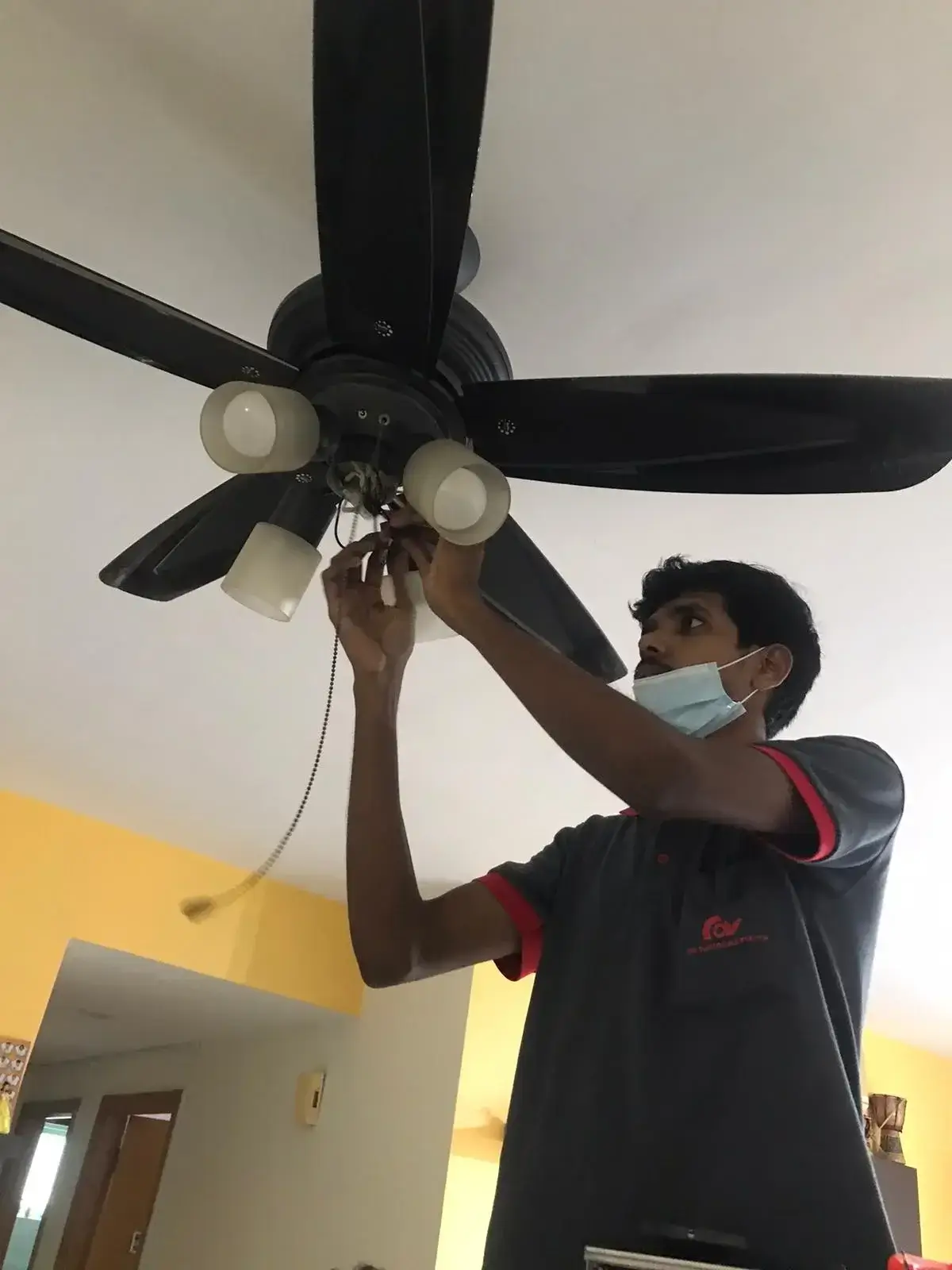
A ceiling fan can make your home more comfortable while improving air circulation, especially in Singapore's warm and humid climate. However, installing a ceiling fan is more than simply mounting the fan to the ceiling and connecting a few wires.
The ceiling structure, existing electrical point, wiring condition, fan weight, ceiling height and installation requirements all need to be considered before the work begins.
If you are planning ceiling fan installation in Singapore, this guide explains the important things you should know, including installation costs, HDB considerations, wiring, safety and when you should engage a professional electrician.
A professional ceiling fan installation normally involves several steps:
Checking the existing electrical point
Inspecting the ceiling and mounting location
Checking whether the ceiling can safely support the fan
Installing the appropriate mounting bracket
Connecting the electrical wiring
Checking earthing and electrical connections
Installing the fan and blades
Testing the fan at different speeds
Checking for unusual movement or vibration
The exact work required depends on whether you are replacing an existing fan or installing a fan at a completely new location.
The cost of ceiling fan installation in Singapore depends on the complexity of the installation.
A simple replacement where an existing suitable electrical point is available will generally cost less than installing a new electrical point or working with a false ceiling.
Typical factors that affect the cost include:
If the room already has a suitable electrical point, installation may be relatively straightforward.
If there is no existing point, additional electrical wiring may be required.
Concrete ceilings, false ceilings and other ceiling structures may require different mounting methods.
A false ceiling may require additional support because the ceiling board itself may not be suitable for carrying the weight and movement of a ceiling fan.
Higher ceilings can require additional equipment, longer mounting components or additional labour.
If the fan needs a new electrical point, additional wiring and electrical work may be required.
The final cost should therefore be confirmed based on the actual site conditions rather than relying only on a standard installation price.
Yes, ceiling fans can be installed in HDB flats, but the installation must comply with the applicable HDB requirements.
HDB's electrical renovation guidelines specify conditions for ceiling fan installation, including requirements relating to fan weight, fixing and clearance. Always check the latest HDB requirements before starting renovation or installation work.
For electrical work involving wiring, modification or other electrical installation work, Singapore's Energy Market Authority (EMA) advises consumers to engage a Licensed Electrical Worker.
It depends on the scope of work.
If the installation involves electrical wiring, modification of an electrical installation, or adding a new electrical point, professional electrical work is important.
EMA states that electrical works at consumer premises should be carried out by Licensed Electrical Workers. This includes work such as new wiring, rewiring, extensions, repairs and modifications to electrical installations.
Using a qualified professional helps ensure that the installation is properly wired, tested and safe.
Old or damaged wiring should be inspected before connecting a new fan.
The fan must be securely mounted to an appropriate support structure.
Make sure the mounting method and ceiling support are suitable for the selected fan.
The available ceiling height should be considered before choosing the fan and mounting configuration.
The existing point should be suitable for the fan installation.
Choose a fan size that is appropriate for the room. A fan that is too large or unsuitable for the space may affect comfort and clearance.
After installation, the fan should be tested at different speeds and checked for unusual vibration, noise or movement.
Poor installation can result in several problems.
A fan that shakes or wobbles excessively may have an installation, balancing or mounting issue.
Loose components, incorrect installation or mechanical problems can cause abnormal noise.
Incorrect wiring, a faulty switch, a damaged component or an electrical supply problem may prevent the fan from operating.
A ceiling fan must be securely supported. Any sign of movement around the mounting point should be inspected immediately.
If installing or operating a fan causes repeated electrical tripping, stop using it and have the electrical system inspected by a qualified professional.
There is a significant difference between replacing an existing ceiling fan and installing one where no fan or electrical point currently exists.
A replacement may be simpler when:
An existing fan point is available
Existing wiring is suitable
The ceiling support is suitable
The new fan can use the existing installation location
A new installation may involve:
New electrical wiring
New electrical point
Additional mounting work
Ceiling inspection
Switch or control installation
Testing and commissioning
Because every property is different, the actual scope should be assessed before installation.
A ceiling fan operates continuously and contains moving components. Secure mounting and correct electrical connections are therefore important.
A professional installation can help with:
Proper mounting
Safe electrical connections
Correct earthing
Wiring inspection
Fan testing
Identifying existing electrical problems
Reducing installation-related safety risks
For electrical work in Singapore, engaging an appropriately licensed professional is especially important.
You should consider contacting an electrician if:
There is no existing electrical point
You need new fan wiring
The existing wiring is old or damaged
The circuit keeps tripping
The fan produces unusual electrical noise
The ceiling fan is unstable
You are unsure whether the ceiling can support the fan
You are replacing a fan during a home renovation
You need electrical modifications
Do not attempt to modify electrical wiring if you are not qualified to do so.
AVV Electrical provides ceiling fan installation and replacement services in Singapore for residential and other properties.
Our electricians can assist with new ceiling fan installations, replacements, wiring requirements and electrical checks.
We serve HDB flats, condominiums, landed properties, offices and other premises across Singapore.
If you are unsure whether your existing electrical point is suitable for a new ceiling fan, our team can assess the installation requirements and recommend the appropriate solution.
The cost depends on the installation requirements, including the existing electrical point, wiring, ceiling type, ceiling height and mounting requirements. Contact an electrician for a quotation based on your actual installation.
Yes. However, the installation should follow the applicable HDB requirements, including requirements relating to installation and clearance.
Not always. If a suitable electrical point already exists, additional wiring may not be necessary. If there is no suitable point, new wiring may be required.
Common causes include incorrect mounting, blade imbalance, loose components or an unsuitable mounting surface. Persistent wobbling should be inspected by a professional.
If the work involves electrical wiring, modification or installation, engaging an appropriately licensed electrical worker is recommended and may be required under Singapore's electrical regulations.
Whether you are replacing an old ceiling fan or installing a new fan, proper mounting and electrical wiring are essential for safe and reliable operation.
AVV Electrical provides professional ceiling fan installation and electrical services across Singapore.
Contact AVV Electrical today to discuss your ceiling fan installation requirements and arrange a professional assessment.
We are a reputable electrical services company based in Singapore, specializing in providing reliable and efficient emergency electrician services. Our team of certified electricians has years of experience in handling all types of electrical emergencies, ensuring that our clients receive prompt and effective solutions to their problems.
2026 AVV Electricals, All Rights Reserved.
We are a reputable electrical services company based in Singapore, specializing in providing reliable and efficient emergency electrician services. Our team of certified electricians has years of experience in handling all types of electrical emergencies, ensuring that our clients receive prompt and effective solutions to their problems.
Our Services

Singapore’s trusted EMA-licensed electrician — serving HDB, condo, landed & commercial properties 24/7.